cc-sdd
gotalab · gotalab/cc-sdd
cc-sdd cung cấp các kỹ năng tác nhân cho nhiều tác nhân mã hóa AI để cho phép phát triển theo định hướng đặc tả và triển khai tự động dài hạn các dự án phần mềm.
Biến các đặc tả đã được phê duyệt thành việc triển khai tự động kéo dài. Một SDD harness tối thiểu, có thể thích ứng với Agent Skills cho Claude Code, Codex, Cursor, Copilot, Windsurf, OpenCode, Gemini CLI và Antigravity.
Xem kết quả thực tế
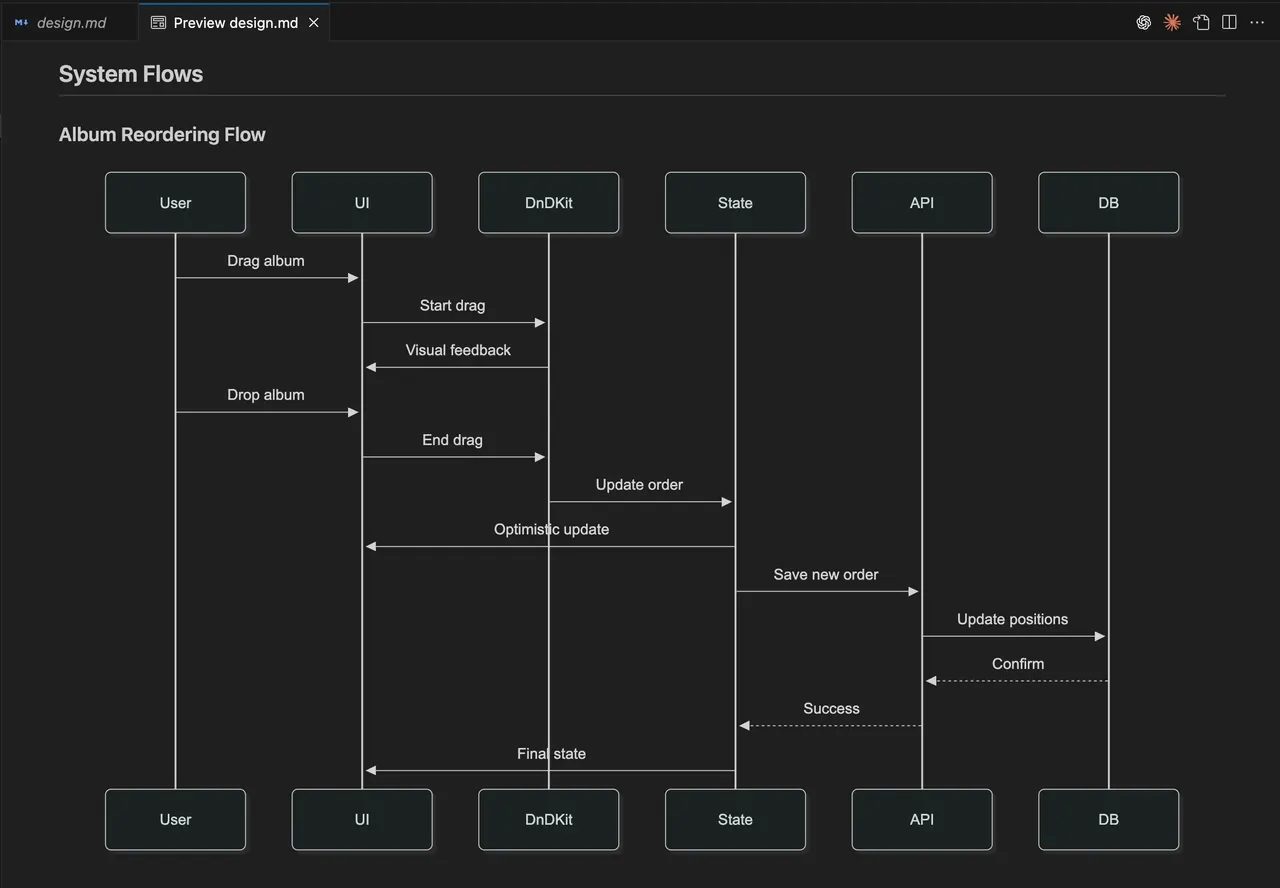
Ảnh từ README của tác giảSơ đồ luồng hệ thống được tạo trong design.md cho tính năng sắp xếp lại album
Ảnh từ README của tác giả gotalab ·Nguồn
Bạn có thể làm gì với nó
- Hướng dẫn một tác nhân AI qua toàn bộ Chu trình Phát triển Phần mềm (SDLC) từ khám phá đến triển khai tự động.
- Triển khai các tính năng phức tạp trong môi trường hỗ trợ AI bằng cách sử dụng phương pháp định hướng đặc tả với đánh giá độc lập cho từng nhiệm vụ.
- Điều phối nhiều tác nhân mã hóa AI (ví dụ: Claude Code, Cursor) để cộng tác trong một dự án phát triển dựa trên các đặc tả đã định trước.
Kiểm tra an toàn
Không thấy dấu hiệu rủi ro trong các file đã quét.
Quét tự động các file trong repo. Luôn xem lại code trước khi chạy.
Trích từ README
cc-sdd: Long-running spec-driven implementation for AI coding agents
Package README: English | 日本語 | 繁體中文
Turn approved specs into long-running autonomous implementation
One command installs an agentic SDLC workflow as Agent Skills: discovery, requirements, design, tasks, and autonomous implementation with per-task independent review on hosts with native subagents. Works across 8 AI coding agents, with the same 17-skill set on each.
👻 Kiro-inspired. Similar spec-driven, agentic SDLC style as Kiro IDE. Existing Kiro specs remain compatible and portable.
What's new in v3.0
cc-sdd v3.0 is a rework around Agent Skills and long-running autonomous implementation.
/kiro-discoveryas the new entry point. Discovery routes new work into one of: extend an existing spec, implement directly with no spec, create one new spec, decompose into multiple specs, or mixed decomposition. It writesbrief.mdand, when needed,roadmap.md, so you can resume a workstream without re-explaining scope./kiro-implfor long-running autonomous implementation. When native subagents are available, each task gets a fresh implementer running TDD (RED → GREEN) behind a feature flag, an independent reviewer, and an auto-debug pass when blocked or after repeated review rejection. Otherwise, implementation and review run inline. Learnings propagate via## Implementation Notesintasks.md. Each iteration handles one task; recorded task state supports resumption after checking unfinished work and active workers.- Boundary-first spec discipline.
design.mdnow includes a File Structure Plan that drives task boundaries. Tasks carry_Boundary:_and_Depends:_annotations. Review and validation look for boundary violations, not just style issues. /kiro-spec-batchfor multi-spec initiatives. Turn a roadmap into multiple specs by dependency wave, in parallel when native subagents are available, with cross-spec review to catch contradictions, duplicated responsibilities, and interface mismatches.- Agent Skills across 8 coding agents. 17 skills per install, loaded on demand (progressive disclosure). Claude Code and Codex are stable; Cursor, Copilot, Devin Local / CLI, OpenCode, Gemini CLI, and Antigravity are in beta. Native subagents are used when available; hosts without them execute sequentially with inline review.
Full skills-mode workflow and /kiro-impl internals: Skill Reference.
Upgrading from v1.x or v2.x? See the Migration Guide.
Why cc-sdd?
cc-sdd treats the spec as a contract between parts of the system, not a master command document handed to the agent. Code remains the source of truth. Specs make the boundaries between parts of the code explicit so humans and agents can work in parallel without constant synchronization.
The bet: explicit contracts at the right granularity let AI-driven development at team scale move faster, not slower. Agents write the spec, humans approve the contract at phase gates, code is what ships.
Boundaries are not overhead. They are what lets you move freely inside while protecting the outside.
Full rationale, trade-offs, and when-to-use / when-not-to-use: Why cc-sdd? A philosophy note.
Quick Start
cd your-project
npx cc-sdd@latest
The default installs Claude Code Skills with English docs. To pick another agent or language:
npx cc-sdd@latest --codex-skills --lang ja      # Codex, Japanese
npx cc-sdd@latest --cursor-skills --lang zh-TW  # Cursor IDE, Traditional Chinese
Supports 8 AI coding agents (Claude Code and Codex stable; Cursor, Copilot, Devin Local / CLI, OpenCode, Gemini CLI, and Antigravity in beta) and 14 languages. See Supported Agents for the full list.
Then, in your agent:
/kiro-discovery <idea>
Not sure where to start? Start with kiro-discovery. It routes your request and tells you what command to run next.
Common workflows
| You want to... | Skills mode |
|---|---|
| Start a new feature or product-sized idea | kiro-discovery → kiro-spec-init → kiro-spec-requirements → kiro-spec-design → kiro-spec-tasks → kiro-impl |
| Extend an existing system | kiro-steering → kiro-discovery or kiro-spec-init → optional kiro-validate-gap → kiro-spec-design → kiro-spec-tasks → kiro-impl |
| Break down a large initiative | kiro-discovery → kiro-spec-batch |
| Implement a small change with no spec | kiro-discovery → direct implementation |
Legacy /kiro:* command modes are still available (--claude, --cursor, etc.) but are deprecated. See the Migration Guide for the upgrade path.
For larger approved task sets, run kiro-impl. Native subagents provide per-task implementation, independent review, and auto-debug when available; otherwise the workflow runs in the main context with inline review.
See It In Action
Example: build a new Photo Albums feature.
/kiro-discovery Photo albums with upload, tagging, and sharing
# discovery writes brief.md (and roadmap.md when multi-spec) and suggests the next command
/kiro-spec-init photo-albums
/kiro-spec-requirements photo-albums
/kiro-spec-design photo-albums
/kiro-spec-tasks photo-albums
/kiro-impl photo-albums
# autonomous: fresh implementer/reviewer when subagents are available; inline otherwise
Typical spec outputs (under 10 minutes):
requirements.md: EARS-format requirements with acceptance criteria.design.md: architecture with Mermaid diagrams and a File Structure Plan.tasks.md: implementation tasks with boundaries and dependency annotations.
On a host with native subagents, /kiro-impl runs tasks with TDD (RED → GREEN) behind feature flags, independent review, and auto-debug on failure. Inline execution follows the same review protocol in the main context.
Supported Agents
Eight cur