auteur
agiwhitelist · agiwhitelist/auteur
This Claude Code skill allows AI agents to art-direct and build cinematic websites and landing pages by generating assets and enforcing design quality.
The Claude Code skill that directs a website like a film. Commit-sheet, generated assets, build, and an executable anti-slop linter that gates every ship.
See it in action
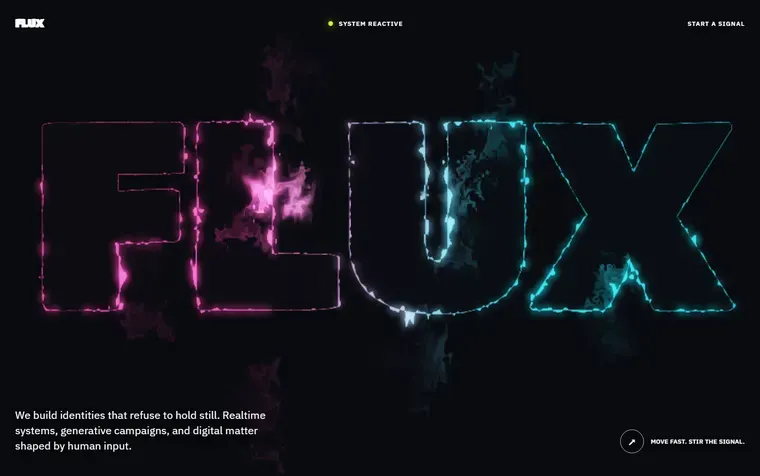
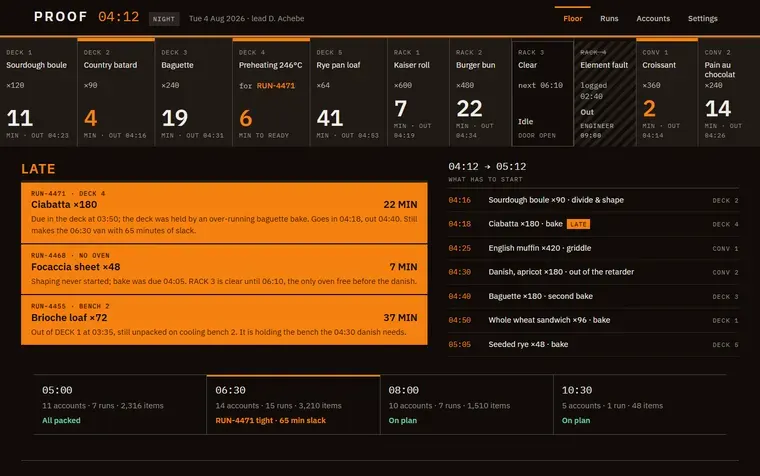

From the author's READMEFLUX wordmark with neon outlines over fluid simulation
From the author's README agiwhitelist ·Source
What you can do with it
- Generate a cinematic landing page for a new product launch with GPU particle effects.
- Build a portfolio website that has dynamic, art-directed visual elements.
- Quickly scaffold a web project with automatically generated design assets and a quality-gated build process.
Safety check
No risky patterns found in the files we scanned.
Automated scan of the repo files. Always review code you run.
From the README
English · 简体中文
auteur
The Claude Code skill that directs a website like a film.
Art direction is locked before a line of code. Assets are generated by local CLIs. Every ship is gated by an executable anti-slop linter and a real motion check.
▶ Open the live gallery · Install · The method · The gates
Not a mockup — that's the live landing page. 131,072 GPU particles holding the wordmark, torn by the cursor and re-forming. Built by the skill it sells.
Install (30 seconds)
auteur is an Agent Skill: a SKILL.md
plus reference recipes and a few runnable scripts. ~1MB, no dependencies, no
API keys, no build step.
Any agent — one command. Detects what you have installed and writes to each agent's skills folder:
npx skills add agiwhitelist/auteur
Claude Code · Codex · Cursor · OpenCode · Gemini CLI · Windsurf · Cline ·
Goose · Copilot · Hermes · Kiro · Roo · OpenHands — 75+ agents,
project-level or -g for global.
Claude Code, as a plugin — installs and updates in place:
/plugin marketplace add agiwhitelist/auteur
/plugin install auteur@auteur
OpenClaw:
openclaw skills install git:agiwhitelist/auteur --global
Anything else that reads a SKILL.md — clone it into the agent's skills
directory:
git clone --depth 1 https://github.com/agiwhitelist/auteur ~/.claude/skills/auteur
Then just ask:
"build me a cinematic landing with auteur"
Claude runs the pipeline — commit-sheet → assets → build → gate — and hands you the site.
The proof: ten live sites
Don't take the pitch — open them. Each was built by auteur, and each passes the
skill's own linter at 0 fails / 0 warns. The tenth was not built by Claude:
Kimi K3 was handed SKILL.md and a brief, saw none of the other nine, and came
out lit, serif and green in a category whose every reflex is black and gold —
naming in writing, before it built, the four house tells it intended to break.
The skill is the thing that travels, not the model.
FLUXWebGL fluid that tears the wordmark under the cursor
SWARM131,072 GPU particles on a curl-noise field
STATICBroadcast-glitch type you can shred with a drag
HALEA CC0 microscope taken apart on scroll — sourced, not generated
TRUE NOONA year of real sun positions, computed live for your latitude
PROOFFive screens of a production floor — a product, not a page
DRIFTA 3D world of monoliths and volumetric fog you fly through
ATLASA photoreal flight: dunes → canyon → coast → summit
ABYSSAn ocean dive, scroll-scrubbed video with a camera dolly
HOROBuilt by Kimi K3, not Claude — the dial is CSS and keeps your time
FLUX / STATIC / SWARM / DRIFT are real-time WebGL. HALE is sourced CC0 geometry
under a CC0 HDRI. TRUE NOON is 145KB with zero raster assets. PROOF is the system
register — five routes gated for design-system drift. ATLAS and ABYSS are the
video-scrub tier (reference/scroll-flight.md). HORO is the portability test:
another model, same file, and the gates it had to satisfy are the same ones —
slopscan 0/0/0, 53fps at DPR 2, worst contrast 6.50, and a page whose measured
lightness (0.740) matches what its own commit-sheet promised before the build
(0.72). The landing page is an eleventh, built by the discipline it sells.
There are no benchmark numbers anywhere in this repo. auteur is a design discipline, not a system with a throughput figure. The one quantitative claim — the linter result — you can reproduce in one command (below).
And it is not a component library. Nothing is pulled from a registry: every site above is authored from its commit-sheet up, vanilla, with no runtime dependency. If you want ready-made animated components to drop in, take shadcn or originkit.dev — this skill directs a page instead of stocking it.
How it works
A director's pipeline, enforced in order:
- Recon.
refscoutprofiles live award-winning sites — the libraries they really load, how many scenes they pin, their scroll budget, the fonts and palette as painted — andmoodboardpulls a numbered contact sheet from Bing / Pinterest / are.na. Art direction gets decided from live material and a dated read of the category's reflex, not from memory. - Commit-sheet. One committed art direction — a single brand hue, a type system, a motion budget, named anti-references — written down before any markup. No "let's see how it looks" drift.
- Generated assets. Imagery, video frames, depth maps and 3D geometry from local CLIs (Codex / Gemini image gen, Blender headless, Depth-Anything), routed by cost and by what each tool is actually good at.
- Build. One WebGL context, GSAP/Lenis scroll, DOM motion on transform & opacity only — from proven recipes: fluid, GPGPU particles, 3D worlds, scroll-morph state machines.
- Gate. Nothing ships until it passes both gates below.
The gates (this is the point)
slopscan — a zero-dependency linter that fails the build on concrete
slop, not vibes:
git clone --depth 1 -b gh-pages https://github.com/agiwhitelist/auteur site
node scripts/slopscan.mjs site                  # the landing
node scripts/slopscan.mjs site/showcase/flux    # any showcase
# → Summary: 0 fails, 0 warns, 0 suppressed
It catches the 250–290° purple→blue AI gradient, transition: all,
addEventListener('scroll') for animation, autoplay audio, video with no
poster, WebGL with no prefers-reduced-motion branch, Inter/Space-Grotesk
defaults, em-dash-slop copy, and more. Runs in CI on every shipped page — so the
"0 slop" claim above can't silently rot.